4 Always On, Always Rushed for Time?
Exploring Momentary Associations Between Passively Sensed Smartphone Use, Feeling Rushed, and Perceived Task Juggling1
4.1 Abstract
This mixed-methods study combines experience sampling and smartphone log data to explore momentary associations between passively sensed smartphone use, feeling rushed, and perceived task juggling in daily life. Using data from 774 adults, we analyze how four use features (frequency, duration, fragmentation and notifications received) of four mobile app categories (email, social media, chat, and work communication) affect how rushed people feel, both directly and indirectly by increasing their perceived juggling load. At the between-person level, persons who use work communication app more frequently and longer, and who receive more chat notifications, also felt more rushed on average. Findings also revealed within-person associations in the theorized direction (e.g., increased email frequency predicting increased task load and feelings of being rushed) for nearly all features of three out of four examined app categories, with social media use features as a noticeable exception. Perceived task juggling mediated these associations, suggesting that the examined smartphone use features contribute to feeling rushed by increasing the (real or perceived) load of tasks that people juggle within and across role domains. Some patterns differed based on age, gender, parenthood and segmentation preference. Taken together, these findings support the theoretical link between technology use and experiences of time scarcity.
Keywords: Mobile communication, feeling rushed, time pressure, acceleration theory, juggling load, log data, experience sampling, passive sensing, social media, email, messaging, chat, work communication
4.2 Introduction
The advent of mobile communication has deeply impacted everyday life, promoting a culture of 24/7 connectivity in which people are ‘always on’ (Castells, 2007; Vanden Abeele, 2021; Vorderer et al., 2017). This always-on lifestyle is linked to perceptions of time. In line with Rosa’s (2017) acceleration theory, for instance, which posits that technological advancements increase the perceived pace of life, mobile connectivity is theorized to play a role in why people generally feel rushed, or as Wajcman (2008) puts it, as if they are living life ‘in the fast lane’.
It seems to matter what smartphones are used for, however: Ross et al. (2023), for instance, found social app use was associated with decelerated time perception, whereas messaging app use was associated with accelerated time passage among more intense users of such apps. An explanation for this differential pattern of results can be found in Bittman et al.’s (2009) study on the link between mobile communication and experience of feeling rushed. The findings from this study suggest that, especially in workplace contexts, mobile communication in the form of calling and texting has the capacity to ‘compress time’ by increasing task density and evoking more frequent task switching. As Ross et al. (2023) note, social media use, on the other hand, might rather signal ‘downtime’, i.e. moments in which time is less compressed than usual.
While theoretical work on mobile communication and time perception is extensive, empirical studies using behavioral data remain scarce. Hence, a first aim of this study is to examine momentary associations between passively sensed mobile media use and feeling rushed for time in a large sample of adults (N = 774). We hereby explore the role of four different app categories, namely email (e.g. Outlook), chat (e.g., WhatsApp), social media (e.g., Instagram) and work communication (e.g., Teams, Slack), and examine theoretically relevant behavioral features of their use that go beyond frequency and duration, also exploring their fragmentation and the number of notifications received for them.
Second, the mechanisms linking mobile communication to feeling rushed remain understudied. As mentioned above, the work of Bittman et al. (2009) and others (Kalman et al., 2021; Lanctot & Duxbury, 2021; Pritchard & Symon, 2023; Thulin & Vilhelmson, 2022) suggests that mobile communication can lead to an intensification of work, with multiple tasks being squeezed and multitasked. Following Williams et al. (1991), we define this experience as ‘task juggling’. Psychological research suggests task juggling elevates cognitive load, fragments attention and heightens subjective feelings of urgency, leading to a more fragmented perception of time (Baethge & and Rigotti, 2013; Mark et al., 2008; Sussman & Sekuler, 2022). Moreover, because of its boundary blurring potential, mobile communication may not only foster the juggling of tasks within a social role, but also across roles, for instance when individuals juggle both contractual work and unpaid household tasks in the same timespan (Lanctot & Duxbury, 2021; Nagy et al., 2021; Wajcman, 2015). A second aim of this study is to examine if, at the momentary level, the experience of intra- and interrole juggling explains the association between mobile communication and feeling rushed.
Finally, scholars such as Wajcman (2008) indicate factors such as gender and parenthood likely moderate the aforementioned associations. Moreover, mobile media (e.g., Ross et al., 2023; Vaid et al., 2024) and media effects scholars (e.g., Valkenburg et al., 2024) increasingly pay attention to effect heterogeneity. A third aim is therefore to explore this heterogeneity, and how it relates to sociodemographic factors such as gender, age, parenthood and employment status.
To address these aims we conducted a mixed-methods study involving 774 adult participants, from whom we collected both experience sampling (ESM) data and passively sensed smartphone use data. Before providing further details on the methodology, however, we first explain our theoretical rationale.
4.3 Theoretical Framework
4.3.1 Acceleration and Mobile Communication
Mobile communication is regarded as a contributing force to people’s harried experience of time (Bittman et al., 2009; Ling, 2017). At first glance, this may be counterintuitive. After all, mobile connectivity offers its users more flexibility to organize their work and personal lives, which could supposedly help them to free up time. But research shows mobile connectivity has rather led to increased productivity demands (Prommer, 2019; Santarius & Bergener, 2020). Indeed, as a result of mobile communication even the interstices of life, i.e. the moments in-between the “spheres of home, work and friends” (Görland, 2019, p. 323) are now filled up with social activities and work (Santarius & Bergener, 2020).
In view of the above, it might not surprise that studies link mobile connectivity to perceptions of an overall increase in the pace of life. Thulin & Vilhelmson (2022), for example, characterize mobile technologies as the “pacesetters of everyday rhythms of work” (p. 262) as they find that for many, these devices, and in particular mobile email applications, are used to synchronize tasks and updates with colleagues, leading to expectations of higher availability and an increase in overall work pace. Similarly, Bittman et al. (2009) found positive associations between mobile phone use, work intensification, and time pressure, albeit only for men. From a theoretical point of view, these observations are illustrative for a society that is accelerating (Rosa, 2017): the rapid technological change in mobile communication has contributed to social change, i.e. in the form of the emergence of a culture of 24/7 connectivity, in which individuals increasingly perceive time as fast-paced, and experience a constant feeling of being rushed.
Work by Mullan & Wajcman (2019) nuances the relationship between mobile use and subjective time pressure, however: They found that, while the total time spent performing work on mobile phones had no unique effect on time pressure, short “micro-episodes” of quick checking or monitoring of incoming communications already influence how rushed people feel. This highlights the importance of considering the nature of mobile interruptions (Wajcman, 2008).
4.3.2 The Nature of Mobile Communication: Frequency, Duration, Fragmentation and Notifications of Different App Categories
To understand the nature of mobile communication, we should not treat ‘smartphone screen time’ as a monolithic concept, but rather consider its theoretically relevant facets (Kaye et al., 2020; Meier & Reinecke, 2021). To situate these theoretically relevant facets, we can draw from Meier and Reinecke’s (2021) taxonomy of computer-mediated communication (CMC), which distinguishes different analytical levels of mobile communication.
One such facet is what category (or type) of mobile application the phone is used for. These categories often share distinct features (Meier & Reinecke, 2021). Applying this framework, our study specifically investigates four theoretically relevant mobile application categories (email, work communication, messaging and social media) and explores four of their usage features (frequency, duration, notifications and fragmentation). This choice is based on prior research indicating meaningful variation based on both app categories and usage characteristics (e.g. notifications or fragmented use patterns) related to stress and distraction (Aalbers et al., 2023; Siebers et al., 2024).
Work-related apps (e.g., Teams, Slack) might increase feelings of being rushed more than mobile messaging or social media apps, as this category can be linked to work intensification (Lanctot & Duxbury, 2021; Mullan & Wajcman, 2019; Thulin et al., 2019; Thulin & Vilhelmson, 2022; Wajcman, 2015). With respect to usage characteristics, there are also time-relevant features of mobile communication that go beyond screentime and duration: First, mobile communication typically comes with notification systems. Prior research already shows that receiving numerous notifications can be overwhelming and stressful (Lanctot & Duxbury, 2021; Ytre-Arne et al., 2020). We build further on this observation, hypothesizing that receiving more notifications — especially from mobile email or work communication — can create situations of high urgency, which may make people feel more rushed.
Second, mobile communication typically comes with fragmentation, which refers to frequent, short bursts of engagement with the device dispersed across time (Siebers et al., 2024). These may play a role in experiences of harriedness (Wajcman, 2008). In the current study, we include a fragmentation feature based on the work by Siebers et al. (2024), who have shown that the fragmented nature of interacting with a mobile device is associated with distraction.
Based on the above-mentioned evidence of mobile technology use as a source of harriedness, our first research aim is to explore how different facets of mobile media use associate with feeling rushed, where we hypothesize that:
H1: At the within-person level, individuals will feel more rushed when they have used mobile communication apps (i.e., mobile email, mobile work communication, mobile messaging and mobile social media use) more frequently (H1a), for a longer duration of time (H1b), received a larger number of notifications for these app activities (H1c) and have engaged in these activities in a more fragmented nature (H1d).
H2: We expect the above pattern of associations to be stronger for mobile email and mobile work communication app use than for mobile messaging and mobile social media use.
4.3.3 Task Juggling as a Mediation Process
While mobile devices may directly impact how rushed we feel, we also need to consider the processes of how these effects come to be. One such process is likely the experience of “juggling” multiple tasks, within and across role domains. Mobile devices allow for anytime, anyplace connectivity, and hence for communication about new tasks and responsibilities, both within and outside the current social role one is performing (Duxbury et al., 2014; Vanden Abeele et al., 2018). This leads to mobile connectivity having a complex and even paradoxical relationship with autonomy (Vanden Abeele, 2021): While we gain autonomy by switching more flexibly between tasks pertaining to our various social roles, the inescapable flipside of this flexibility is that we are also constantly exposed to the potential of incoming demands of these roles, that therefore can more easily blur and come into conflict, leading to (role) pressure and stress.
Prior research already shows that being interrupted by, and needing to manage, overlapping roles and tasks can lead to negative well-being outcomes, such as exhaustion (Derks et al., 2021) and stress (Cornwell, 2013). We argue here that another outcome may be feeling more rushed. Indeed, an accelerated experience of time may stem from the sentiment that we are constantly ‘juggling’ or ‘multi-tasking’ (potentially conflicting) tasks, both within and across different role domains (Wajcman, 2008), as this may lead to our work in these domains being intensified (Bittman et al., 2009). A recent diary study (Lu, 2024), for instance, has shown that an increase in work-time fragmentation, characterized by more disruptions in the workday schedule, impacts the amount of time pressure experienced. This is presumably because the necessity of frequent role switching to meet various role demands contributes to this pressure (Cornwell, 2013): These different roles vie for our time and attention, often leading to role conflicts and role blurring which can make us feel harried or rushed for time (Lu, 2024). Given the ubiquity of mobile devices and the communication they facilitate, multiple disruptions throughout the day seem inevitable, potentially triggering a higher task load within and across our work and private roles.
Psychological literature on time perception provides additional insights into how task juggling, whether induced by mobile communication, might intensify feelings of being rushed. Specifically, some of the mechanisms through which juggling might mediate this relationship include task density (the number of tasks packed into a limited timeframe), frequent task-switching (shifting attention between distinct activities), interruptions needing reprioritization of ongoing tasks, and the general disruption of task flow (Baethge & and Rigotti, 2013; Steyvers et al., 2019; Wearden, 2016; Wittmann, 2009). Each of these mechanisms impose a cognitive load that can fragment attention and can contribute to subjective experiences of increased urgency or time pressure. In addition, states of high cognitive load are likely to lead to increased arousal, and the interplay between these states can further intensify perceptions of accelerated time (Wittmann, 2009). Given that mobile communication frequently involves these types of attentional switching and disruptions to task prioritization and workflows, it likely increases experiences of feeling rushed.
Therefore, as second research aim, we test if juggling load mediates the effect of mobile media use on feeling rushed:
H3: At the within-person level, perceived juggling load mediates the association between mobile communication and feeling rushed: At moments when individuals engage more in mobile communication (as expressed in frequency, duration, number of notifications, and fragmentation), they report a greater juggling load, and this load in turn explains momentary feelings of being rushed.
4.3.4 Person- and Situation-Specificity
Finally, we may expect mobile communication to impact experiences of feeling rushed and juggling load differently for different individuals, depending on both the context and personal characteristics of these individuals. Vostal (2021) recently highlighted the importance of considering the dynamic and person-specific experiences of acceleration. They argue for a view where individuals have “temporal agency” and thus the capacity to develop strategies to navigate acceleration experiences, which can differ from moment to moment. Individuals may integrate their mobile devices differently as part of these strategies. Yet, as Vostal (2021) notes, not every person may have equal access to every strategy, and not every strategy is likely to be equally effective for every person.
Structural factors such as preferences for role integration and segmentation, employment status, household responsibilities and gender can shape how individuals experience mobile communication’s impact (Grotto & Mills, 2023; Piszczek, 2017; Thulin et al., 2019; Wajcman, 2015). Grotto & Mills (2023), for instance, showed that illegitimate interruptions had a larger effect on well-being for men compared to women, possibly due to our social expectations on gender roles. Work by Lu (2024) has also shown that the fragmentation of work time can have a different impact on the amount of time pressure experienced depending on gender and household responsibilities. They found that women without children showed a stronger relationship between work time fragmentation and time pressure compared to mothers, and, surprisingly, the opposite relation for fathers. Finally, Duxbury et al. (2017) found that women’s feelings of being time-pressed and overwhelmed by role demands were more strongly influenced by their home experiences compared to men.
These findings showcase the importance of taking dynamic and person-specific effects into account — a claim which has recently been voiced by many mobile media scholars (e.g., Vaid et al., 2024; Valkenburg et al., 2024; Vanden Abeele, 2021). As such, the third aim of this study is to investigate the dynamic and person-specific nature of the relationship between mobile media use and time experiences. To that end, we explore:
RQ1: To what extent are person-specific associations observable between mobile communication, juggling load and feeling rushed?
RQ2: What differences can be observed in these associations based on gender, age, parenthood and segmentation preferences?
4.4 Methods
4.4.1 Sample
This study draws from a large-scale citizen science project (approved by the IRB of Ghent University, code: 2022/11). A total of 1,315 participants provided consent prior to completing two weeks of mobile experience sampling, with data collection starting in November 2022. From 916 Android2 users we collected over 7 million unique smartphone trace events.
After data cleaning, the final dataset included 774 participants with sufficient ESM and smartphone data. The average age within this sample was 38.32 years (SD = 11.17), with participants identifying predominantly as female, actively working and having higher education qualifications.
4.4.2 Procedure
Participants installed apps for questionnaires (m-Path) and smartphone monitoring (MobileDNAPlus).
Over two weeks, participants received six daily questionnaires (7:30 a.m. – 10:45 p.m.) assessing feelings of being rushed and juggling load, among other topics outside this study’s scope. Our OSF page (see below) gives an overview of all items included.
Furthermore, during this two-week period, our passive monitoring tool captured participant’s app usage (timestamped applications), sessions (timestamped screen on/off events) and notifications (timestamped notifications received and interacted with). These trace data were then aggregated into different features (see Behavioral measures below), matching the ESM time windows.
4.4.3 Measures
4.4.3.1 Momentary self-report measures
Feeling rushed was measured by asking participants: “Since getting up this morning/Since the last beep… I felt rushed for time.”, with the following options: (1) Not at all, (2) Very rarely, (3) Rarely, (4) Sometimes, (5) Often, (6) Very often (7) All the time. This measure, adapted from Robinson (2013), incorporated a bipolar response scale.
The Juggling load measure, adapted from Williams et al. (1991), asked participants whether they switched tasks (‘no’, ‘between non-work tasks’, ‘between work tasks’, ‘between both work and non-work tasks’). We recoded responses ordinally: (1) no juggling, (2) within-domain juggling (work or private), and (3) cross-domain juggling. This decision was made given we theorized that while some task juggling was likely to manifest as an increased task load and increased feelings of being rushed relative to no task juggling, it seemed plausible that juggling tasks across domains would constitute additional load. For instance, completing tasks related to one’s personal life while at work in the eyes of most employers is not a justifiable use of one’s work time, thus receiving communication to complete personal life tasks may take the form of adding the task to the many work tasks one already must engage with. In contrast, receiving a work task via email when at work may allow one to justify reprioritizing one’s work load by, for instance, delaying some tasks until the following day. We also consider it plausible that across-domain juggling will generally be more disruptive (e.g., to one’s workflow) than within-domain juggling, further justifying our operationalization.
4.4.3.2 Behavioral measures
Based on the smartphone trace data, we created the following measures, aggregated per application category and per self-report time window: Duration sums the total screentime for each of the following four app categories: chat (e.g. WhatsApp), social (e.g. Facebook), email (e.g. Outlook) and work communication (e.g. Microsoft Teams). Frequency counts the total amount of app launches for each of these same four categories. Fragmentation looks at the dispersion of these two dimensions across time: A low value signifies that less time was spent on this app category and this across fewer sessions, while a high value indicates more time spent, and this in frequent and short bursts (see Siebers et al., 2024 for further information). Finally, notifications sums the number of incoming notifications for the four categories of app activities. Operationally, apps were grouped into categories based on their default categorization from the Google Play Store, combined with manual validation. Our OSF page includes the full list of apps and their categorization.
4.4.3.3 Socio-demographic, trait and control variables
We included the following sociodemographic and trait self-report measures: Gender, which was recoded as (0) Male, (1) Female. Age, participant age in years. Parenthood status, recoded as (0) no children, (1) one child or more. Segmentation preference, a Likert-like scale stating “I prefer to keep my work life and private life separate” with (1) completely disagree to (5) completely agree. The variable was then dichotomized, with scores below four coded as (0), while scores of four and five coded as (1). In addition, we included two control variables: Work activity (binary indicator: 1 = working, 0 = not working) and Time of day, based on the ESM answer timestamp, dummy-coded into three variables, morning (6h – 12h), afternoon (12h – 18h) and evening (18h – 24h), with afternoon taken as the reference category.
4.4.4 Data Analysis
Data preparation and descriptive statistics were conducted in Python using the Pandas package, with the repeated measures correlations obtained through the pingouin package. Level-1 Mediation analyses were conducted in R using the Lavaan package, while mixed-effects and person-specific models were conducted using the lme4 package. Linear mixed-effects models examined associations between rushed and smartphone use. For mediation and person-specific analyses, all variables were measured at the same time-point, and models included the binary work activity and time of day control variables. Cross-level interaction models did not include these binary controls. All Lavaan models showed adequate fit (CFI: above .90; RMSEA: lower than .08; SRMR: lower than .05) according to current standards (Marsh et al., 2004). Lastly, we employed two-tailed testing and considered effects significant if p-values were .05 or less.
4.4.5 Transparency and Openness
All code, processed data and materials for reproducibility can be found on OSF (https://osf.io/ztxmh).
4.5 Results
4.5.1 Descriptives
Table 4.1 presents within-person descriptives, showing that participants rarely felt rushed, but indicated feeling somewhat (4) to very (7) rushed and to be juggling in 39% of the questionnaires. Juggling load was significantly correlated with feeling rushed at both the within- and between-person levels. Working was also significantly correlated with juggling load and feeling rushed at both levels. At the between-person level, feeling rushed correlated with gender (higher among women: r = .12), age (r = -.15), and segmentation preference (r = .09) while juggling load correlated with parenthood (r = .27) and segmentation preference (r = .14).
Table 4.2 reports the daily averages of mobile communication measures, for participants with more than seven days of log data, but note that for the further analyses the full sample was considered. Participants’ average daily smartphone use was 2hr and 25min with considerable variation across application categories.
| Mean | SD | Min | Max | |
| rushed | 2.91 | 1.67 | 1.0 | 7.0 |
| juggling load | 0.49 | 0.67 | 0.0 | 2.0 |
| chat duration | 2.73 | 8.46 | 0.0 | 267.67 |
| chat frequency | 5.74 | 11.24 | 0.0 | 273.0 |
| chat notifications | 3.64 | 7.77 | 0.0 | 260.0 |
| chat fragmentation | 0.25 | 1.04 | 0.0 | 42.84 |
| social duration | 2.96 | 8.36 | 0.0 | 201.1 |
| social frequency | 2.93 | 8.31 | 0.0 | 279.0 |
| social notifications | 0.61 | 2.43 | 0.0 | 131.0 |
| social fragmentation | 0.27 | 1.23 | 0.0 | 75.54 |
| email duration | 0.80 | 2.75 | 0.0 | 98.25 |
| email frequency | 2.55 | 6.06 | 0.0 | 155.0 |
| email notifications | 1.05 | 3.80 | 0.0 | 207.0 |
| email fragmentation | 0.07 | 0.35 | 0.0 | 27.51 |
| w. comm.a duration | 0.05 | 0.66 | 0.0 | 41.14 |
| w. comm. frequency | 0.10 | 0.94 | 0.0 | 36.0 |
| w. comm. notifications | 0.12 | 1.13 | 0.0 | 72.0 |
| w. comm. fragmentation | 0.00 | 0.07 | 0.0 | 6.27 |
N = 42,858. a w. comm. = work communication. All duration variables are expressed in minutes per questionnaire time window. The average duration of a time window was 3h 17m 43s. Descriptives we calculated across all data points, without first aggregating per participant.
| N | Mean | SD | Min | Max | |
| total duration | 568 | 145.50 | 66.79 | 22.01 | 433.90 |
| total frequency | 568 | 90.98 | 45.54 | 10.22 | 284.82 |
| total notifications | 612 | 26.81 | 22.26 | 1.50 | 225.17 |
| chat duration | 567 | 18.10 | 17.58 | 0.30 | 131.02 |
| chat frequency | 567 | 18.98 | 13.15 | 1.60 | 108.91 |
| chat notifications | 606 | 16.37 | 13.65 | 1.00 | 109.62 |
| social duration | 488 | 23.47 | 23.10 | 0.00 | 193.99 |
| social frequency | 488 | 12.18 | 12.39 | 1.00 | 95.45 |
| social notifications | 383 | 5.57 | 9.50 | 1.00 | 109.08 |
| email duration | 548 | 5.64 | 6.33 | 0.03 | 61.02 |
| email frequency | 548 | 9.79 | 8.75 | 1.00 | 58.55 |
| email notifications | 402 | 8.52 | 10.04 | 1.00 | 86.25 |
| w. comm. duration | 162 | 2.26 | 2.39 | 0.00 | 14.28 |
| w. comm. frequency | 162 | 2.90 | 2.46 | 1.00 | 23.67 |
| w. comm. notifications | 135 | 4.97 | 5.16 | 1.00 | 34.71 |
Daily smartphone descriptives for participants with > 6 days of log data.
Calculated as the average amount per participant, per day. All duration variables are expressed in minutes per day.
4.5.2 Smartphone Use and Feeling Rushed
Table 4.3 shows the within- and between-person correlations. We found partial support: Social media use was not significantly correlated with feeling rushed, but for the other three app categories all features (frequency, duration, fragmentation and notifications) were positive predictors.
Overall, correlations were small (r = .03 to .07). Notifications from email (r = .07) and work apps (r = .06) were most strongly related to feeling rushed, while fragmented use had weaker associations.
At the between-person level, several of the usage indicators related to work communication, email, social media and chat apps showed significant positive correlations with feeling rushed, again offering partial support.
Our second hypothesis expected the associations of email and work communication apps to be stronger than those for social and chat apps. Figure 4.1 shows the coefficient estimates and confidence intervals (CI) of sixteen (four features across four categories) mixed-effects models, and provides partial support: Examining each category’s CI, we saw that social media features showed no overlap with email or work communication features, however, chat features did.
| 1 | 2 | 3 | 4 | 5 | 6 | 7 | 8 | 9 | 10 | 11 | 12 | 13 | 14 | 15 | 16 | 17 | 18 | 19 | 20 | |
| 1. rushed | .50*** | .27*** | .12*** | .07 | .10** | .15*** | .09* | .02 | .08* | .07* | .03 | .05 | .07* | .07* | .05 | .11** | .11** | .09** | .10** | |
| 2. juggling load | .38*** | .38*** | .05 | .02 | .09* | .08* | .08* | .01 | .04 | −.02 | .07* | .12** | .14*** | .03 | .16*** | .08* | .12** | .12** | .07* | |
| 3. work a | .32*** | .45*** | −.14*** | −.02 | .06 | .10** | .05 | .01 | .04 | .03 | .06 | .02 | .04 | .05 | .07* | .14*** | .15*** | .16*** | .11** | |
| 4. gender b | −.00 | .00 | .02** | .14*** | .11** | .04 | .09* | .15*** | .11** | .03 | .08* | −.01 | .00 | −.03 | −.03 | −.05 | −.03 | −.06 | −.03 | |
| 5. chat duration | .03*** | .05*** | .04*** | −.01* | .52*** | .53*** | .82*** | .31*** | .26*** | .16*** | .28*** | .15*** | .14*** | .10** | .19*** | −.00 | −.02 | −.04 | .01 | |
| 6. chat frequency | .03*** | .06*** | .05*** | −.01 | .49*** | .54*** | .66*** | .37*** | .55*** | .25*** | .49*** | .19*** | .35*** | .07* | .31*** | .01 | .07 | .02 | .03 | |
| 7. chat notifications | .06*** | .09*** | .09*** | .00 | .33*** | .47*** | .60*** | .33*** | .41*** | .33*** | .37*** | .03 | .07* | .23*** | .12*** | −.02 | −.01 | −.02 | −.01 | |
| 8. chat fragm. | .04*** | .05*** | .05*** | −.01 | .74*** | .58*** | .38*** | .35*** | .45*** | .25*** | .54*** | .19*** | .23*** | .09* | .40*** | −.00 | −.01 | −.03 | .02 | |
| 9. social duration | −.01 | −.00 | −.03*** | −.01 | .15*** | .27*** | .16*** | .19*** | .67*** | .39*** | .83*** | .10** | .18*** | .12** | .18*** | .01 | .04 | .01 | .02 | |
| 10. social freq. | −.01 | .01** | −.00 | −.00 | .19*** | .42*** | .24*** | .27*** | .63*** | .53*** | .72*** | .05 | .23*** | .05 | .18*** | −.00 | .05 | .01 | .01 | |
| 11. social notif. | .01 | .03*** | .03*** | .00 | .11*** | .19*** | .28*** | .14*** | .22*** | .37*** | .42*** | −.02 | .01 | .13*** | .05 | −.01 | .00 | .02 | −.00 | |
| 12. social fragm. | .01 | .03*** | .01** | −.00 | .17*** | .33*** | .20*** | .36*** | .71*** | .56*** | .23*** | .13*** | .24*** | .08* | .36*** | −.01 | .02 | .00 | .02 | |
| 13. email duration | .04*** | .05*** | .05*** | .00 | .13*** | .22*** | .11*** | .15*** | .12*** | .13*** | .05*** | .11*** | .71*** | .04 | .84*** | .11** | .12*** | .09* | .12*** | |
| 14. email frequency | .05*** | .06*** | .07*** | −.00 | .20*** | .40*** | .19*** | .24*** | .23*** | .28*** | .09*** | .24*** | .64*** | .04 | .71*** | .13*** | .18*** | .13*** | .14*** | |
| 15. email notif. | .07*** | .09*** | .13*** | .01 | .11*** | .15*** | .24*** | .15*** | .08*** | .09*** | .14*** | .10*** | .14*** | .18*** | .06 | .07 | .09* | .12*** | .09* | |
| 16. email fragm. | .04*** | .05*** | .06*** | −.00 | .14*** | .28*** | .17*** | .27*** | .12*** | .15*** | .06*** | .21*** | .75*** | .60*** | .19*** | .11** | .12** | .10** | .15*** | |
| 17. w. comm. dur. | .03*** | .04*** | .05*** | .00 | .02*** | .04*** | .03*** | .02*** | .02*** | .02*** | .01* | .02*** | .06*** | .08*** | .07*** | .08*** | .87*** | .65*** | .93*** | |
| 18. w. comm. freq. | .04*** | .05*** | .08*** | .01 | .03*** | .07*** | .04*** | .03*** | .05*** | .06*** | .03*** | .05*** | .09*** | .14*** | .10*** | .10*** | .58*** | .67*** | .84*** | |
| 19. w. comm. notif. | .06*** | .07*** | .11*** | .00 | .01** | .03*** | .05*** | .01* | .02** | .01** | .03*** | .02*** | .03*** | .04*** | .18*** | .04*** | .19*** | .34*** | .60*** | |
| 20. w. comm. frag. | .03*** | .04*** | .05*** | .00 | .03*** | .05*** | .04*** | .04*** | .03*** | .03*** | .02*** | .06*** | .10*** | .10*** | .13*** | .16*** | .81*** | .58*** | .21*** |
a work: 0 = no work activity reported, 1 = work activity reported.
b gender: 0 = male, 1 = female. * p < .05 ** p < .01 *** p < .001
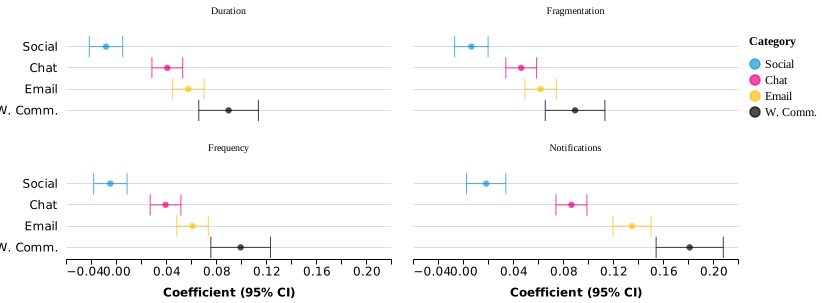
Note: This figure shows the effects of the standardized coefficients on the original (non-standardized) rushed variable. W. Comm. is short for the “work communication” category.
4.5.3 Juggling Load Mediation
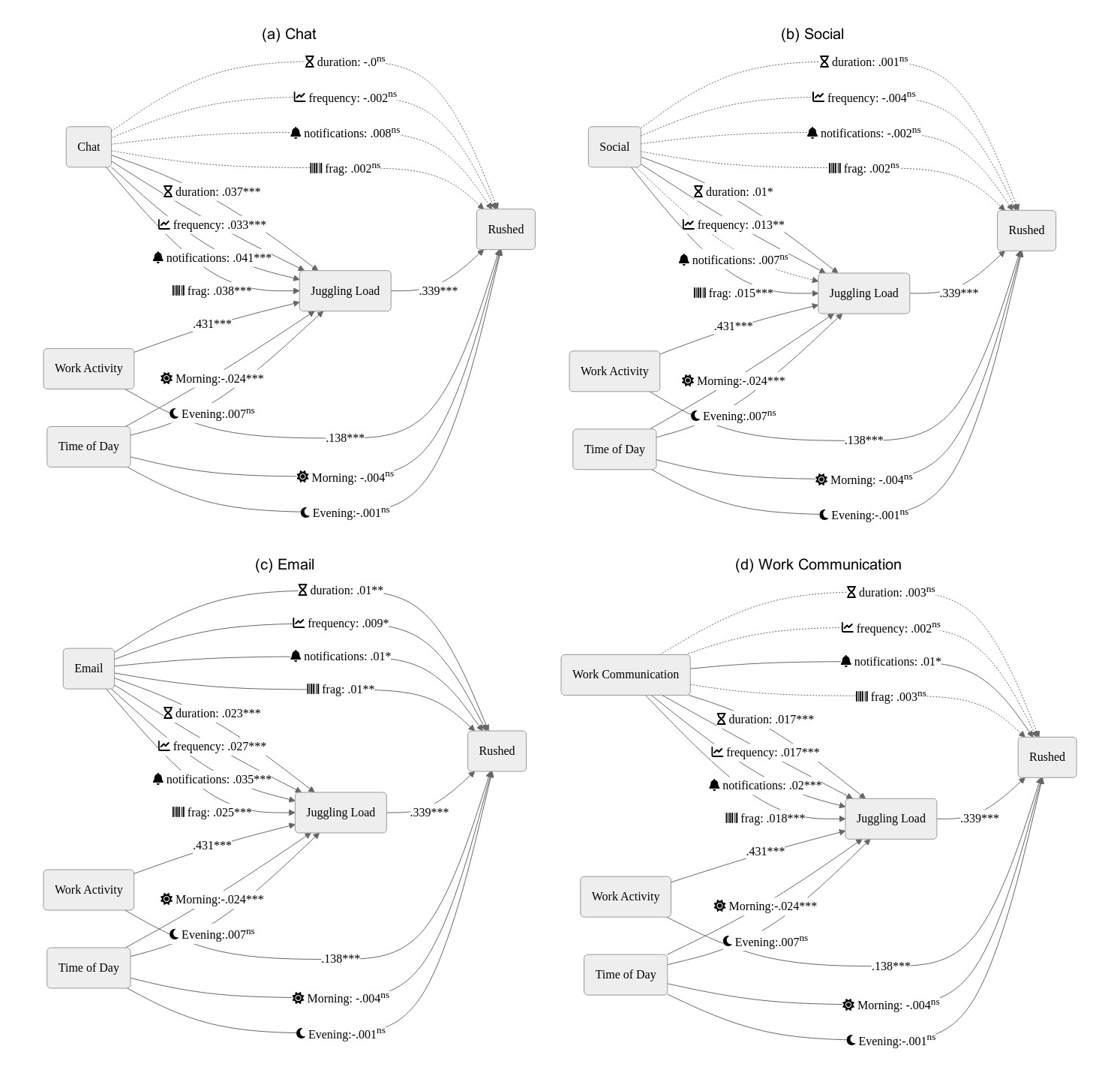
Thirdly, we hypothesized that the link between mobile media use and feeling rushed would be partly explained by task juggling, such that mobile communication promotes a greater juggling load, which in turn leads to feeling more rushed. The within-person correlations table (see Table 4.3) already indicates that, overall, associations between mobile communication and juggling load appeared to be slightly stronger than those between mobile communication and feeling rushed. To formally test this hypothesis, however, we performed a series of mediation analyses, with each model including a single behavioral representation of mobile media use. Hence, in total, we ran sixteen models (four features across four categories).
In addition, we controlled for momentary work engagement due to its link with time pressure (Mullan & Wajcman, 2019; Pritchard & Symon, 2023), and for the time of day, as this can influence both subjective time experiences and mobile communication usage patterns (e.g., Ross et al., 2023).
Figure 4.2 shows the diagram for each of these models, grouped per category. Table 8.1 in the appendix contains the full output. We report findings per mobile communication activity.
For mobile messaging or chatting, we see that all features showed a small effect on feeling rushed through role juggling. Chat interactions indirectly increased feelings of being rushed through juggling load, while direct effects were suppressed when controlling for work and time of day.
For social media use, the pattern was different: When controlling for juggling load, interacting with social media failed to show any direct or total effects, while there were only small, but significant and positive indirect effects for social media frequency, duration and fragmentation on juggling load.
All email features directly and indirectly increased feelings of being rushed. When investigating the path through juggling load, all features showed a significant total effect, with the amount of email notification received being the strongest predictor (\(\beta\) = .035).
Finally, the notifications received from work communication apps showed a direct effect on feeling rushed, while, once more, when looking at the indirect effects through juggling load, we saw all four features showing a significant effect. Similar to the email category, the models testing duration and frequency of work communication use showed smaller total effect sizes (\(\beta\) = .009, .008) compared to the model with notifications received (\(\beta\) = .017).
4.5.4 Person-specific Effects
As a third and final aim, we explored the person-specificity of the associations between mobile communication and feeling rushed and juggling load. Table 8.2 and Table 8.3 in the appendix show the distribution of person-specific effects on feeling rushed, and juggling load, respectively, again controlling for having worked and time of day. Most participants showed negligible associations (coefficients < .05), across all our features, with many effects being non-significant.
For feeling rushed, chat and email notifications received showed both positive and negative subgroups, with heterogeneity intervals showing associations nearly three to six times as intense compared to their average associations.
Juggling load, in contrast, showed less variability for chat notifications received, but a similar pattern for email notifications. Here, the heterogeneity interval indicated that some participants showed negative associations nearly three times as intense, and some positive and five times as intense than the average.
While it is possible that participants experienced certain media effects very differently, these results should be interpreted with caution. Many of these effects were likely influenced substantially by the lower amount of datapoints available per participant. They may very likely reflect random variation of a true null effect, rather than opposite effects canceling each other out (Johannes, 2020). Nonetheless, cross-level interactions revealed that sociodemographic factors explained some of this heterogeneity (see Table 8.4). Older participants had weaker associations between chat notifications and feeling rushed or juggling load. In addition, the association between juggling load and both chat and email notifications received was stronger for participants preferring segmentation. Finally, participants with children tended to show stronger associations between email notifications received and feeling rushed.
4.6 Discussion
The first two aims of this study were to examine (1) whether mobile communication is associated with how rushed people feel, and to explore (2) if task juggling serves as a potential mediating process explaining such an association. The third aim was to explore whether there is heterogeneity in these associations, and if so, if that heterogeneity can be explained by person- and context-specific factors. To address these aims, we drew from a dataset of 42,861 data points combining passively sensed smartphone data with multiple daily self-reports and survey data gathered from 774 adult participants.
With respect to the first aim, this study found that various features of the four examined mobile communication app categories were positively correlated with feeling rushed. In other words, fluctuations in chat, email, work communication app use were positively related to feeling rushed. This idea is also supported by our between-person level analyses, which indicate that individuals who in general interacted more with work communication apps and received more notifications by chat apps reported higher overall levels of feeling rushed. The findings also provide support for our second aim, as perceived juggling load mediated the relationship between several features of mobile communication and feeling rushed.
Overall, these findings align both with acceleration theory (Rosa, 2017) and psychological theories of time perception (Baethge & and Rigotti, 2013; Sussman & Sekuler, 2022) suggesting that technology accelerates the pace of life by increasing task switches and density, intensifying feelings of being rushed. This effect was especially noticeable for email and work communication apps, which likely heighten urgency and workload (Bittman et al., 2009; Mullan & Wajcman, 2019; Pritchard & Symon, 2023). Evidence for the latter intensification shows in the mediation through juggling load. This observation underscores the mechanism of mobile communication intensifying the (perceived) work load through the multitasking and switching between tasks, a finding consistent with literature on work fragmentation and role switching (Cornwell, 2013; Lu, 2024). Despite small effect sizes, these results are meaningful in the larger context of mobile communication’s impact on daily life: they might accumulate over time, potentially leading to a more meaningful long-term impact on our (mental) well-being.
Social media use showed negative, non-significant associations with feeling rushed, possibly reflecting leisure usage. While a negative relationship aligns with the findings from Ross et al. (2023) — who found that social media use was often linked to decelerated time perceptions — further research with more data is needed to support this effect. While we did not find a direct link between social media use and feeling rushed, we did find a positive association between the duration, frequency and fragmentation of mobile social media use and juggling load. This finding calls into question whether there may be reversed causality, both here but similarly for the other categories, where in situations of increased juggling load, individuals turn more to social media (for relaxation) and mobile communication (for managing task loads). Future research is needed to unpack the temporal order of these associations.
A strength of this study lies in examining different features of mobile communication across various categories, revealing differential patterns. This supports the call by mobile media scholars to move beyond monolithic ‘screen time’ measures and consider the nuances of daily communicative behavior (de Segovia Vicente et al., 2024; Ross et al., 2023; Vaid et al., 2024). Our decision to classify app use by category was informed by previous work highlighting distinct connotations between these categories (e.g. Aalbers et al., 2023; Meier & Reinecke, 2021). However, we acknowledge that this classification carries inherent multidimensionality: app categories do not map cleanly onto communication modalities nor activities. For instance, the use of certain messaging applications may be used for both casual chatting and work-related coordination. Future research might explore other levels of CMC, such as message content, to more accurately distinguish different dimensions of mobile communication.
This study found associations at both within- and between-person levels. A third aim was to examine if heterogeneity was present in the size and direction of these associations, and could be explained by age, parenthood status and segmentation preference (as theoretically relevant explanatory factors of this variation). Individuals who engaged more with work communication apps and chat apps felt more rushed. This feeling was particularly pronounced among women, working individuals, and younger participants. This suggests stable differences, linked to social roles and occupations, indicating that mobile communication preferences and behavior can reflect social structures and display the broader ‘habitus’ of social groups (Vanden Abeele & Nguyen, 2024). Prior research also suggests that a harried lifestyle, potentially displayed through smartphone use, can act as a status marker (Fast et al., 2021). Future research may seek to investigate this further.
Although this study has offered new insights in the relation between mobile communication, feeling rushed and juggling between domains, it has limitations. First, the observed effect sizes of within-person effects were small, which may be related to the complexity of feeling rushed as a construct. This experience is likely influenced by multiple factors besides mobile communication, such as being at work which was a far greater predictor. Moreover, the experience of feeling rushed itself can be seen as containing multiple dimensions (Denovan et al., 2024).
Second, our operationalization of the juggling load may not fully have captured the complexity of juggling roles within a single domain. The similar levels of being rushed experienced when juggling within work versus across work and private domains suggests that the work role alone can be intense, with individuals often being required to switch between different sub-roles (Ashforth et al., 2000). It also suggests that our theory about cross-domain juggling constituting greater task load (relative to within-domain juggling) may not be sufficiently nuanced.
Third, this study did not examine other devices (e.g., laptops, desktops) commonly used in knowledge work, potentially affecting boundary management. Future research should explore how different devices impact perceptions of time pressure independently and how their combined use might even intensify these effects.
Fourth, our sample was limited to Android users, potentially influencing generalizability. Recruitment was conducted in collaboration with a large local newspaper and targeted an older, educated demographic. The voluntary nature of participation may also have introduced some bias. However, as there was no financial incentive, the data quality and reliability likely remain high.
Fifth, participants had the flexibility to engage with the study at their leisure, potentially limiting the experienced range of feeling rushed in daily life. We acknowledge that this selection bias can contribute to the low averages of the rushed measure. Indeed, a few participants explicitly communicated that they felt they lacked sufficient time to participate fully and chose to drop out. However, our analyses primarily focused on within-person effects, providing most insight into momentary, within-person dynamics, rather than generalizable, aggregate findings.
Sixth, the use of ESM might have, inadvertently, increased participant’s feelings of being rushed or their juggling load, by adding additional task(s) throughout their day. In addition to this increased task burden, responding to repeated ESM prompts may have heightened participant’s awareness of time — similar to how mobile devices themselves can function as constant reminders of the current time, through device’s clock, timestamped messages, or calendar reminders (Ross et al., 2023). Together, this increased awareness of passing time may contribute to experience of being rushed, even in the absence of increased task density or task switching. Although ESM remains crucial for capturing momentary assessments, minimizing memory biases and maximizing ecological validity, future studies should account for its potential impact.
Finally, due to the observational design, reverse causality cannot be excluded (e.g., feeling rushed prompting greater chat use). However, such reversed effects seem less likely for externally driven features such as receiving email notifications. Future research should explicitly address these potential bidirectional relationships.
In conclusion, this study has contributed to the understanding of how different indicators of mobile communication — especially those related to work — are associated with feeling rushed, mediated by the experience of juggling multiple roles and tasks. Using a large sample of 774 participants, and by combining both passively logged smartphone data with ESM, we have attempted to capture both the dynamic and person-specific nature of these effects. Our findings support acceleration theory by empirically highlighting mobile devices’ role in accelerating daily life. Lastly, we revealed that these associations can vary based on individual factors such as age, parenthood and segmentation preference, underscoring the importance of considering both situational and personal factors when investigating mobile communication’s impact on wellbeing.
Published as: Van Gaeveren, K., Murphy, S., De Segovia Vicente, D., & Vanden Abeele, M. (2025). Always on, always rushed for time? Exploring momentary associations between passively sensed smartphone use, feeling rushed, and perceived task juggling. Mobile Media & Communication. https://doi.org/10.1177/20501579251377010↩︎
iPhone trace data could not be collected due to technical limitations of the operating system.↩︎